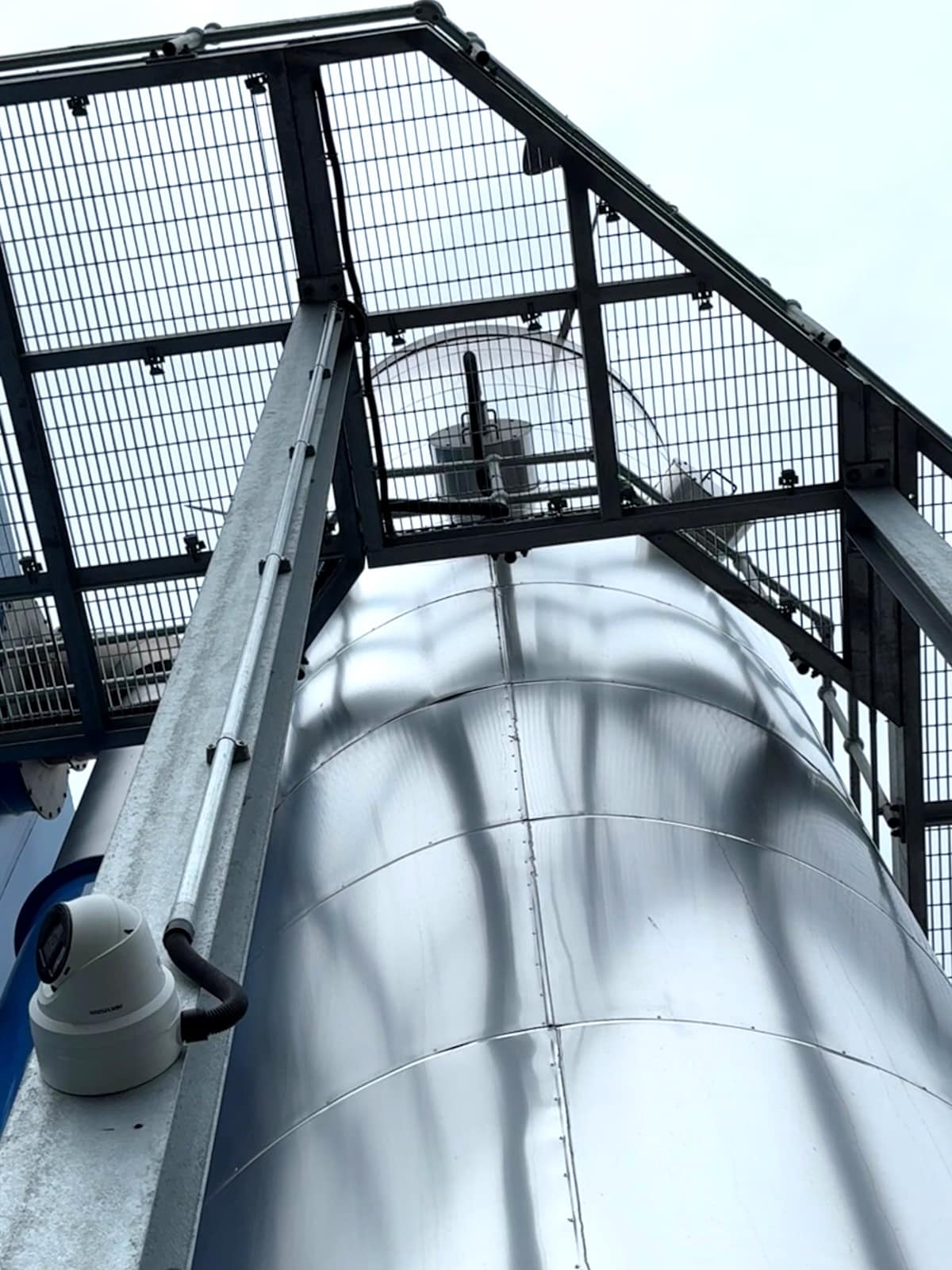
In solvent-based manufacturing, emissions control is not simply a compliance exercise. It directly affects process stability, operating efficiency, environmental performance and production confidence.
For facilities using Regenerative Thermal Oxidisers (RTOs) to abate Volatile Organic Compounds (VOCs), continuous monitoring provides the real-time data needed to confirm that emissions are being correctly treated – not just during annual compliance testing, but every day.
This case study looks at how ProAmpac Advanced Coatings in Wrexham uses a Signal Group MCERTS-certified SOLAR CEMNEX continuous FID analyser to monitor post-combustion VOC emissions from its RTO and support environmental compliance, process control and long-term operational reliability.
The Challenge: Managing VOC Emissions in Coating Processes
ProAmpac Advanced Coatings is a global supplier of precision coating materials, including coated papers, films and specialist substrates used in digital imaging, electronics, medical and optical applications.
Its manufacturing processes involve the use of solvents, which makes robust VOC emissions control essential.
The Wrexham site operates as a Part A2 installation under an environmental permit issued by the local council. Historically, the permit has included emission limit values for pollutants such as:
- Total Organic Carbon / VOCs
- Carbon monoxide
- Nitrogen oxides
These emissions are periodically checked by an MCERTS-accredited contractor, but the site also recognises the value of continuous monitoring between formal compliance tests.
Why Thermal Oxidiser Monitoring Matters
The site has long relied on thermal oxidation to destroy VOCs, air pollutants and odours generated during coating production.
A Regenerative Thermal Oxidiser works by treating VOC-laden exhaust gases at high temperature, oxidising them into less harmful products such as carbon dioxide and water vapour.
However, RTO performance can be affected by:
- Process changes
- Solvent loading variations
- Airflow changes
- Burner performance
- Ceramic media condition
- Temperature control
- Mechanical wear over time
Any issue with the RTO can have serious consequences. If VOC destruction efficiency falls, emissions may rise before a periodic test ever takes place.
That is why continuous VOC monitoring is so valuable: it gives operators real-time visibility of abatement performance.
Investing Ahead of Regulatory Change
ProAmpac’s original RTO was installed in 1995 and had provided around 30 years of service. As the system aged, the ceramic beds required increasing maintenance.
At the same time, regulatory requirements for solvent-based coating processes were becoming more stringent. Updates to the Best Available Technique Reference Document for Surface Treatment using Organic Solvents (STS BREF)introduced lower emission limits for applicable installations, prompting the local council to begin drafting a revised permit for the site.
Rather than relying only on annual testing, ProAmpac chose to take a more proactive approach.
As Dan Hitchcock, Project Manager at ProAmpac Advanced Coatings, explains:
“Continuous monitoring allows us to manage performance proactively rather than retrospectively.”
The company invested in a new, more efficient RTO with a capacity of up to 150,000 Nm³/hour, commissioned in 2025.
The Solution: Continuous VOC Monitoring with Signal Group
For more than 20 years, ProAmpac had continuously monitored post-combustion VOC emissions using a Signal Group analyser based on Flame Ionisation Detector (FID) technology – the recognised reference method for VOC measurement.
The original analyser remained in operation for approximately two decades, demonstrating long-term reliability in a demanding industrial application.
When the site upgraded its RTO, ProAmpac selected Signal Group again, installing an MCERTS-approved SOLAR CEMNEX continuous FID analyser at the base of the RTO exhaust stack.
Signal Group also supplied the heated sample line, ensuring the sample remains representative as it travels from the stack to the analyser.

Why FID Technology Is Used for VOC Measurement
Flame Ionisation Detection is widely used for VOC and Total Hydrocarbon measurement because it provides sensitive, stable detection of hydrocarbons.
In this application, FID technology is used to monitor post-combustion VOC emissions from the RTO, helping operators verify that the oxidiser is effectively destroying solvent vapours and maintaining emissions within permitted limits.
For solvent-based coating facilities, this is particularly important because VOC loading can vary depending on:
- Product type
- Coating formulation
- Production schedule
- Line speed
- Solvent use
- RTO operating conditions
Continuous FID measurement provides the live data needed to understand these variations and respond appropriately.
Real-Time Data, Real-World Benefits
The Signal system provides ProAmpac with real-time VOC emissions data, allowing the team to monitor RTO performance continuously rather than relying only on periodic spot checks.
Key benefits include:
🔄 Process Control
The analyser helps operators understand how the RTO responds to changing production conditions, allowing them to optimise oxidiser performance and manage fuel input more effectively.
⚠️ Early Warning of Issues
A rise in VOC emissions can indicate a developing issue with the RTO or process. Continuous monitoring allows the team to act before problems escalate.
📊 Compliance Confidence
Continuous VOC data provides reassurance that emissions remain under control between regulatory tests, supporting confidence ahead of formal compliance monitoring.
🔥 Reduced Operational Risk
RTOs are designed for continuous operation. Interruptions can be costly because restarting requires the system to return to sufficiently high operating temperatures. Thermal cycling can also increase mechanical stress, energy consumption and wear on ceramic media.
🌍 Environmental Assurance
Real-time data supports environmental protection by confirming that abatement equipment is performing as intended.
Integrated Monitoring, Alarms and Calibration
The monitoring system at ProAmpac includes real-time displays, historical data and automated alerts for management staff.
The system also confirms correct operation and calibration of both:
- The analyser
- The heated sample line
This is important because accurate VOC measurement depends on the entire measurement chain — not just the analyser itself.
Sampling must remain representative from the stack to the measurement cell. Heated lines help prevent condensation, which could otherwise affect the measurement by allowing VOCs to dissolve into moisture or causing sample loss.

MCERTS Certification and Regulatory Acceptance
The installed SOLAR CEMNEX system is MCERTS-certified, providing confidence that the system meets recognised performance requirements for continuous emissions monitoring.
As an MCERTS-certified system, the analyser’s data is accepted by regulators including:
- Local councils
- Natural Resources Wales
- SEPA
- The Environment Agency
This is particularly important for industrial sites operating under environmental permits where data quality, traceability and confidence are essential.
Long-Term Support and Maintenance
The ProAmpac system is supported by:
- Daily automatic zero checks
- Periodic span checks using calibration gas
- Comprehensive on-site servicing every six months
- A long-term maintenance agreement with Signal Group
This reflects Signal Group’s wider approach: reliable gas analysis depends not only on instrument design, but also on ongoing support, calibration, serviceability and long-term spares availability.
Why System Design Matters
One of the key lessons from this application is that reliable VOC monitoring depends on the full system.
That includes:
- Sample extraction
- Heated sample transport
- Filtration
- Calibration
- Analyser stability
- Alarm integration
- Data visibility
- Ongoing service support
This aligns with Signal Group’s core design philosophy: accurate gas analysis is not just about the analyser. It is about owning the measurement chain end to end.
Conclusion: Continuous Monitoring as a Practical Advantage
For solvent-based coating facilities, continuous VOC monitoring delivers value far beyond compliance.
At ProAmpac Advanced Coatings, the Signal Group system supports:
- Operational efficiency
- Early fault detection
- Environmental protection
- Regulatory confidence
- Long-term reliability
As regulations tighten and industrial processes become more closely scrutinised, real-time emissions data is becoming increasingly important.
Reliable data allows operators to move from reactive compliance to proactive control.
Speak to Signal Group
If you operate a thermal oxidiser, solvent-based coating process, VOC abatement system or compliance-critical emissions monitoring application, Signal Group can help you design a robust monitoring solution.
📩 sales@signal-group.com